When learning English, one essential grammar point to master is object pronouns. These small words play a big role in helping us avoid repetition and improve sentence flow. In this post, we’ll explain what object pronouns are, how to use them correctly, and offer some tips for ESL learners.
What Are Object Pronouns?
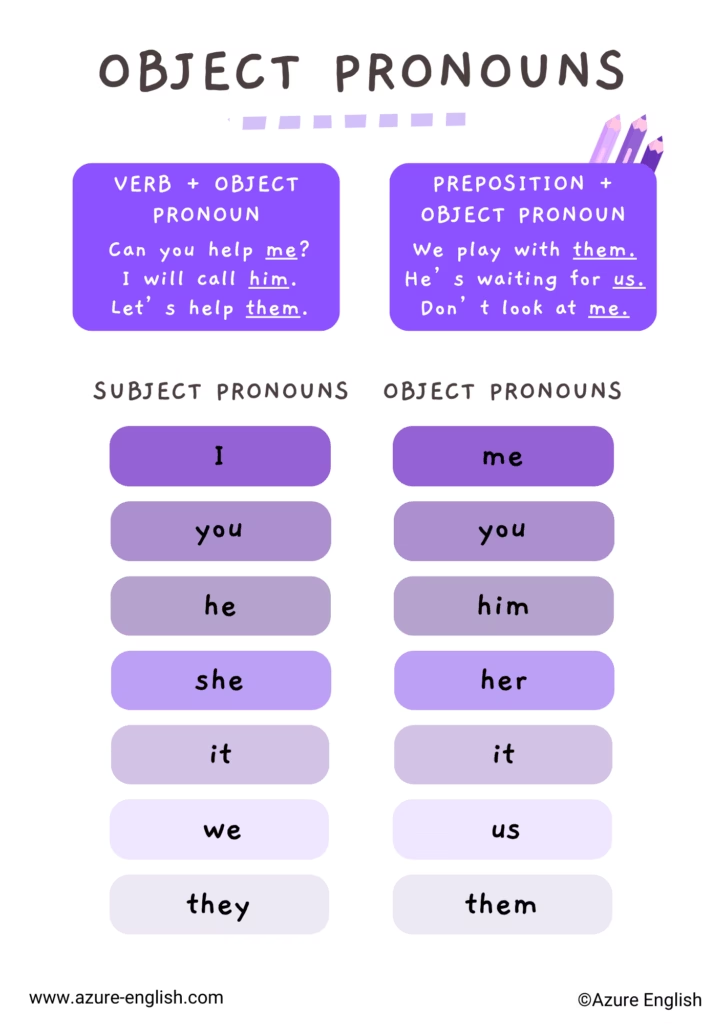
Object pronouns are words that replace nouns and function as the object of a verb or a preposition. They receive the action in a sentence rather than perform it.
The Object Pronouns in English:
| Subject Pronoun | Object Pronoun |
|---|---|
| I | me |
| you | you |
| he | him |
| she | her |
| it | it |
| we | us |
| they | them |
When Do We Use Object Pronouns?
1. After Verbs
Object pronouns are commonly used after verbs to indicate who is receiving the action.
Examples:
- I like him.
- She called me.
- We saw them at the park.
In each example, the object pronoun comes after the verb and tells us who or what is affected by the action.
2. After Prepositions
Object pronouns also follow prepositions such as to, for, with, at, and about.
Examples:
- This gift is for you.
- Can you come with us?
- He was talking about her.
Common Mistakes to Avoid!
1. Using Subject Pronouns Instead of Object Pronouns
Incorrect: She gave I a book.
Correct: She gave me a book.
Many learners mistakenly use I instead of me or he instead of him after verbs or prepositions.
2. Repeating the Noun and the Pronoun
Incorrect: I saw John and I talked to him John.
Correct: I saw John and I talked to him.
Once you’ve used a proper noun, you don’t need to repeat it with a pronoun.
Why Are Object Pronouns Important?
Understanding and using object pronouns helps:
- Avoid awkward repetition
- Make sentences clearer and more natural
- Improve both writing and speaking fluency
They’re also essential in forming common expressions and phrasal verbs in English.
Example:
- Don’t worry about it.
- Tell them to wait.
Quick Practice Exercise
Replace the underlined noun with an object pronoun.
- I saw Anna yesterday.
- They helped my brother and me.
- She wants to meet you and Tom.
- He gave the book to Lisa.
Answers:
- I saw her yesterday.
- They helped us.
- She wants to meet you.
- He gave it to Lisa.
Final Tips for ESL Learners
- Practice using object pronouns in real conversations.
- Try reading and listening to dialogues, and pay attention to how native speakers use them.
- Write your own sentences and substitute nouns with the correct object pronouns.
With time and practice, using object pronouns will become second nature.